Tips for Trailering Your ATV or UTV

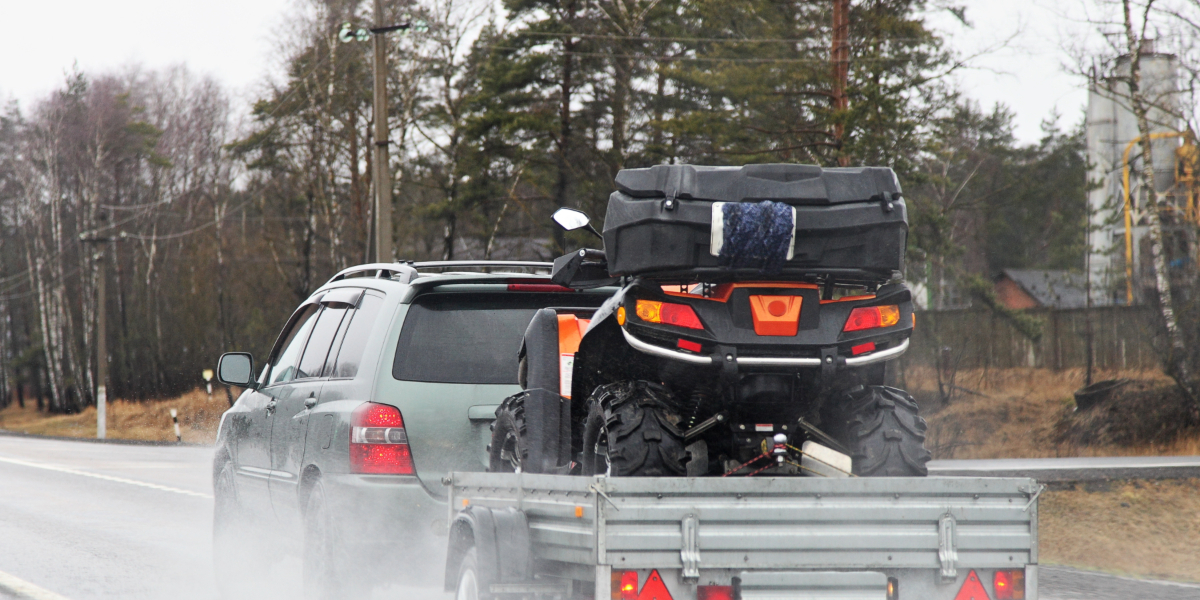
If you happen to live in an area where you are able to enjoy your all-terrain or utility vehicle on or directly from your property, congratulations on living the dream. For those who don’t have that option, trailering is often a necessary part of the ownership experience.
We have compiled some pointers to help make the journey to and from your destination a little smoother and hopefully less eventful than the ride itself.
Go With the Tow
If you have an ATV/UTV parked in your garage or driveway, chances are good that you already have a trailer for it. But is the tow vehicle a good and safe fit for it? To find out, you’ll need to know the empty weight of the trailer, plus the curb weight of the ATV itself. When you add those together, including gear and fuel, you can match that total weight with your vehicle’s towing capacity. Check your vehicle’s owner’s manual to find that number.
However, you’ll also need to know the payload capacity of the tow vehicle, which includes how much weight you’ll have inside the vehicle itself, including passengers and gear. Since about 10 to 15 per cent of your loaded trailer’s weight (known as the tongue weight) is going to be directly on the back of your vehicle, that number needs to be included in the payload calculations. Going above either the tow or payload capacity can overload the vehicle’s structural limits, which can cause mechanical failures while on the road. Overloading can also severely reduce steering control and drastically increase stopping distance.
If you have not purchased your quad or trailer yet, it would be valuable to know your vehicle’s towing and payload capacities first. This could greatly affect which ATV and trailer you purchase, including whether you get an open or enclosed trailer, a single- versus tandem-axle trailer, and whether you go with aluminum or steel.
Loading Up
Another consideration when purchasing a trailer for your ATV is whether it is ramp-equipped, the bed of the trailer tilts down for loading, or if you’ll also need to purchase a ramp system. If you need to purchase ramps, look for arched, non-slip aluminum ramps that extend a safe distance from the trailer to reduce the incline.
With any ramp system, before loading your quad, make sure the trailer is securely fastened to the tow vehicle and that the tow vehicle is in park. This will prevent the trailer from moving while loading. If using a detached ramp system, secure the top of the ramps to the trailer with straps or chains so they don’t slide out when loading the ATV.
Winching vs. Riding On
The Internet is full of ramp fail videos, so best not to add more. If you’re loading a heavy side-by-side, a machine with marginal brakes, or a trailer with a steep ramp angle, a quality hand or electric winch can make loading safer and easier. Position the winch centrally, use a tree-saver or ground anchor if needed, and always wear gloves when handling cable or synthetic rope.
Proper Positioning
With any ramp system, line your ATV up with the back of the trailer and approach slowly and smoothly in first gear. Drive the ATV so it’s positioned evenly from left to right on the trailer, and move it up so approximately 60 per cent of the quad’s weight is toward the front of the trailer. This places downward force on the tow vehicle’s hitch and will prove the handling dynamics of the trailer when in motion. Once in place, set your quad to “Park” or leave it in gear and turn the motor off. If you have an emergency brake, set that as well.
Secure the ATV to the trailer using at least four heavy-duty ratchet straps. Hook the straps to the trailer manufacturer’s suggested anchor points, then to the manufacturer’s suggested anchor points on the ATV. Once attached, cinch everything down tight enough that the suspension of the quad compresses slightly. Secure loose strap ends by tying them off so they don’t flap in the wind while driving.
Avoid hooking straps to handlebars, footpegs, or plastic components that can crack or bend under load. Use soft loops or frame protectors where needed to prevent damage to paint and bodywork. For UTVs with roll cages, route straps through solid cage points and avoid sharp edges that can cut webbing.
Don’t Forget the Basics
Before you strap down, remove or secure loose items: tools, fuel cans, coolers, and riding gear should be stowed in the tow vehicle or tied down separately. If you’re transporting extra fuel, use approved containers and keep them upright and secured.
Moving Out
Before heading off, make sure the trailer is attached properly to the tow vehicle with all the proper safety chains crossed under the tongue to catch the trailer in case of a hitch failure. If there is an electrical hookup for brakes and turn signals on the trailer, make sure that is connected and test the lights before you go. Also make sure that the tire pressure of the trailer and the tow vehicle are at their recommended levels.
Check that the trailer’s brakes (if equipped) are functioning and that the breakaway switch and battery are connected and charged. Verify that the coupler is fully seated and locked, and that the jack stand or tongue wheel is raised and properly secured.
When driving with a loaded trailer, be aware of the fact that you’ll need extra stopping distance when braking. Be sure not to follow other vehicles too closely. You’ll also want to take it easy on tight turns and curves.
It’s also good practice to after the first few miles of driving to ensure nothing has shifted and everything is still secure.
On the Road Best Practices
- Increase following distance to at least four to six seconds behind other vehicles.
- Allow more room for lane changes and avoid sudden steering inputs.
- Reduce speed in crosswinds, rain, or when passing large trucks.
- Use your mirrors constantly and consider adding extended tow mirrors if your view is blocked.
- Plan your route to avoid low-clearance bridges, tight urban streets, and steep grades when possible.
Perform a quick visual check at every fuel stop: straps, tires, lights, and hitch. Re-tighten straps if anything has shifted.
Legal and Safety Reminders
Before you hit the road, confirm that your setup complies with local regulations:
- Trailer registration, licensing, and required safety equipment (lights, reflectors, brakes, breakaway systems)
- Maximum width, height, and weight limits for your route
- Any special permits required for oversized or heavy loads
Properly secured loads aren’t just safer, they’re often required by law. Loose ATVs or gear can cause serious accidents and result in fines or liability.
The Bottom Line
Trailering your ATV or UTV safely comes down to preparation: knowing your tow vehicle’s limits, choosing the right trailer and ramps, loading and strapping the machine correctly, and driving with extra caution. Take the time to do it right, and you’ll spend less time worrying about the journey and more time enjoying the destination.
Barrett Baker
You might also like


