2026 Can-Am Outlander Electric Review

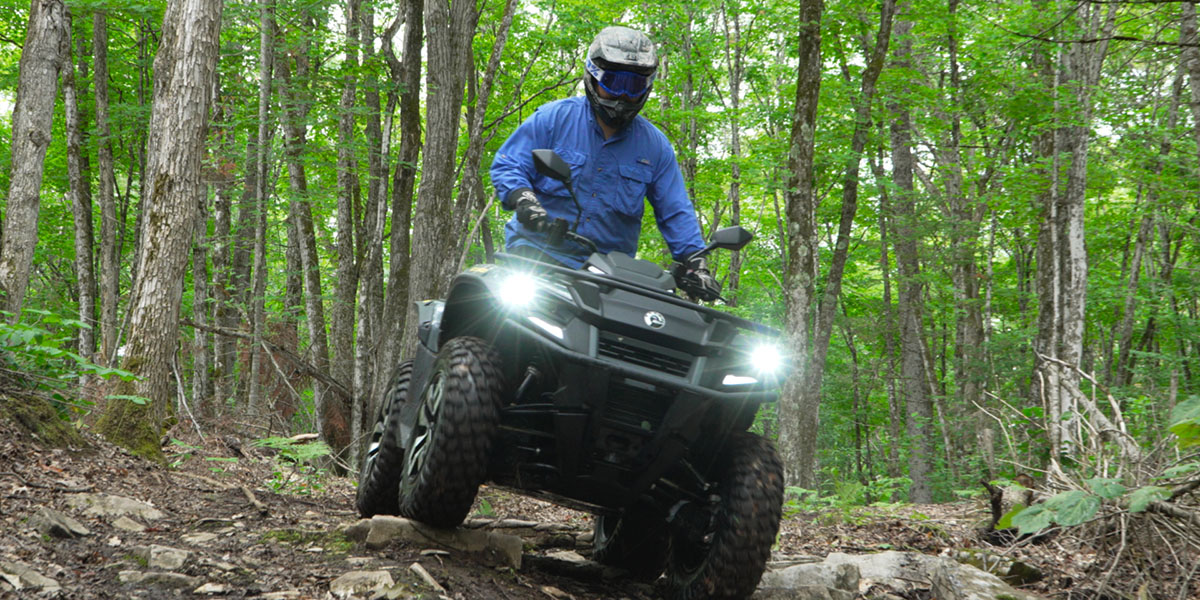
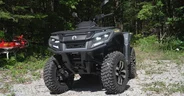
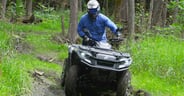
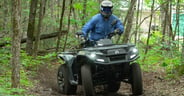

As electrification begins to trickle into the off-road world, it brings with it a new way of looking at some of our favorite vehicles. Getting behind the handlebars of the 2026 Can-Am Outlander Electric was a reeducation in what an ATV can be—on both the good side and the not-so-good side. Switching to an all-electric powertrain for this type of vehicle offers some great benefits, but it also introduces unique drawbacks.
What’s New
The 2026 Can-Am Outlander Electric is an all-new model and the first fully electric ATV in Can-Am’s Outlander lineup. Rather than replacing an existing gas-powered Outlander, it introduces an electric alternative for riders who want familiar utility capability without gasoline, exhaust noise, or routine engine maintenance.
Power comes from a Rotax-built electric motor producing 47 peak hp, 53 lb-ft of peak torque, and 27 continuous hp. Energy is stored in an 8.9-kWh battery pack that can be charged through a standard J1772 connection at Level 1 (120 V) or Level 2 (240 V).
The Outlander Electric retains the familiar Outlander silhouette and ergonomics but adds distinctive LED signature lighting, unique colorways, a body-color front grille, and a 5-inch color display. The display provides real-time information on state of charge, regenerative braking, power delivery, and charging status. Regenerative braking is also adjustable, allowing riders to tailor deceleration for trail riding, descents, or hauling.
CAN-AM OUTLANDER
- Silent operation
- Loads of Torque
- Effective regenerative braking
- Limited range
- Long recharge times
- Higher price than comparable gas models
Styling / Aesthetics / Design
Can-Am didn’t go back to the drawing board when it came to the styling of the Outlander Electric, and that’s a good thing. Rather than trying to make it look like it’s from the future, offering buyers a familiar look with new technology under the skin is likely the best strategy to convince a customer who might already be skeptical of ditching internal combustion.

Unique LED signature lights, unique colorways, and a body-color front grille do set it apart from the rest of the lineup, but not so far that it looks alien.
Powertrain / Engine / Performance / Acceleration
Powering the Outlander Electric is a single electric motor built by Rotax, offering 47 peak horsepower and 27 continuous horsepower. Peak torque is measured at 53 lb-ft, while continuous torque is delivered at 21 lb-ft. That drives the Outlander Electric to a top speed of 50 mph in high range and 28 mph in low range, both of which are electronically limited.
Energy is stored in an 8.9-kWh battery pack, which can be recharged via a J1772 charger at speeds up to Level 2 (240 V). When delivering maximum power, Can-Am says this ATV will go from 20 to 80 per cent charge in 50 minutes, while a zero to 100 percent charge will take one hour and 30 minutes. If charging from a standard 120-volt plug, charge times grow considerably, up to three hours and 10 minutes for 20 to 80 per cent and five hours and 15 minutes for zero to 100 per cent.

This is the first hurdle you must get over if you make the switch to electric. Once your battery is drained, it’s not as easy as pumping a new tank full of gas and hitting the trail again. Plus, public charging infrastructure for off-road vehicles is still basically nonexistent, so don’t expect to find a plug along your way. The flip side of this argument is strong for the right customer, though, as it means you’ll wake up every day with a fully charged battery, and you’ll never need to visit the gas station again or haul another jerry can.
Thanks to the instant torque from the electric motor, the power hits incredibly strongly off the line, spinning the tires at even the slightest stab of the throttle. “Smooth” is an understatement for how the power comes on, especially compared with its gasoline counterparts.
Chassis / Suspension / Handling / Ride Characteristics
While the power delivery is certainly the biggest change from a gas ATV, the ride feel is changed only slightly. The battery lives in the same location where the gas tank usually would, so the weight is located in a fairly similar spot. The center of gravity does feel a little taller on this model than on a gas Outlander, so going around a corner elicits more of a top-heavy push. Still, the double-A-arm suspension front and rear offers 9.75- and 10.25-inches of travel, respectively—plenty to soak up rough and rocky trails.

With a dry weight of 875 lb, the Outlander Electric is slightly heavier than most of the gas-powered versions of this ATV, though not by much, and that is an important fact. When designing this machine, Can-Am could have given it more range, but that requires a bigger battery and more weight, eventually leading to an entirely different riding experience. It feels here like the brand struck the best balance it could, offering enough usable range for many riders while also not compromising the handling with a huge, heavy battery underneath.
Brakes / Stopping / Brake Performance
When it comes time to slow down, the Outlander Electric offers dual 214 mm disc brakes in the front and a single 214 mm disc brake in the rear, which offer plenty of grabbing force when you ask for it. But the Outlander Electric has a second way to slow you down: regenerative braking. Not only does this help you recover power when you’re slowing down, but setting the regen to its most aggressive setting also helps when descending hills or in any situation where engine braking feels necessary, acting as a secondary way of controlling momentum.
Rider Position / Ergonomics
Fitting on the Outlander Electric is easy for a full-size rider, and, like with the styling, Can-Am didn’t feel the need to change the dimensions for the electric model.

The seat offers plenty of cushioning to keep things comfortable, while the footwells are large enough to fit big boots and help the rider move around the unit with ease.
Features / Tech / Safety
Besides the technology under the bodywork driving the Outlander Electric, it also gets a unique 5-inch color display that delivers all the relevant information—and there is more information needed here than on a typical ATV. The state of charge, regenerative braking, and power delivery can all be viewed in real time, so you can keep a close eye on things. Once plugged in, the screen will also tell you exactly how quickly you are charging and when you can expect to return to a full state of charge.
Range / Efficiency
Range will vary, of course, based on your riding style and the load you’re carying/towing, but Can-Am says you can expect up to 50 miles in perfect conditions or just 31 miles of “average utility” riding, which includes things like towing, riding in mud, and extreme temperatures. In our time with the unit, the real-world number skewed much closer to 31 miles than 50, though our rides typically consisted of running through mud, over rocks, and cruising on high-speed dirt roads.

This will also be a limiting factor depending on where you want to go riding. If a long trail ride is your goal, the Outlander Electric simply won’t deliver the range needed. But if you own a piece of property that the machine won’t leave, then that range might work just fine for you.
Value Proposition
The value of the Outlander Electric can only be declared good or bad based on how much you ride it. On the one hand, the $12,999 starting price is more expensive than many of the gas Outlander models, making the price proposition on day one harder to swallow. But filling the Outlander up on electricity costs $1 or less, depending on where you live, compared with somewhere around $40 to fill up a fuel tank. So, if you’re doing enough miles, it will eventually start to pay for itself.

Conclusion
The Outlander Electric is not for everyone, and that’s all right. For customers who value long-distance rides or getting far away from civilization, this isn’t the ride for you. But if you’re staying local, need gobs of power, and never want to see a jerry can again, the Outlander Electric offers an excellent balance of features.
Specifications
Marketplace Inventory
 Stephen Elmer
You might also like


